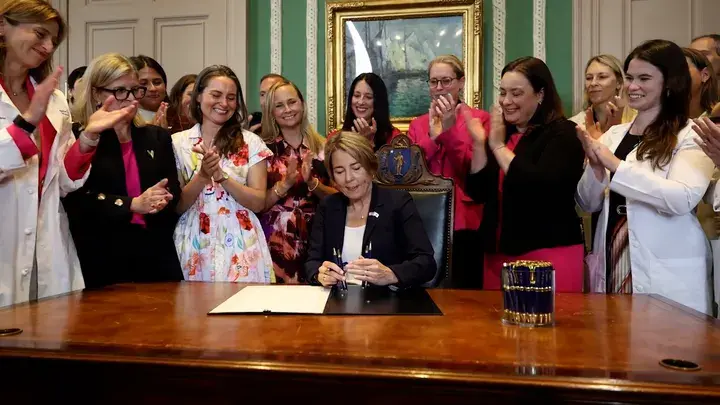
Maura Healey Signs Bill Allowing Abortion Up to Birth in Massachusetts

Massachusetts has drawn a hard moral line, and I believe it’s the wrong one.
I’m against expanding abortion because I’m a Christian, and I believe human life is sacred. I also believe that once a baby has a heartbeat in the mother’s womb, that is a living human being. Ending that life is murder.
Scripture is clear that God is not indifferent to life in the womb. “For you formed my inward parts; you knitted me together in my mother’s womb.” (Psalm 139:13)
People can argue about politics and legal wording, but the core issue is simple: the law should protect the innocent. A baby with a heartbeat cannot speak, cannot vote, and cannot defend itself so it’s on the rest of us to defend that child.
A heartbeat is not a slogan. It’s a sign of life. It’s measurable. It’s real. It’s the clearest reminder that we are not dealing with an abstract “choice,” but with a developing human being who already exists.
Some will say, “This is a private medical decision.” But abortion is not like other medical procedures, because it involves two lives. In every other area of law, we recognize that the strong have responsibilities toward the weak. We don’t measure human worth by size, strength, location, or dependence. If we did, the elderly, the disabled, and the sick would be at risk too.
Others will argue that abortions later in pregnancy are rare, or that they only happen in extreme cases. Even if something is rare, that doesn’t make it right. And when laws are written broadly, they don’t just cover the hardest cases they shape the culture. They teach people what is acceptable. They tell us what we will tolerate.
This is also why language matters. When the public is told that abortion is “healthcare,” it can hide what abortion actually does. Healthcare is meant to heal and preserve life. Abortion ends a life. We should be honest about that, because honesty is the beginning of accountability.
At the same time, this isn’t about shaming women. Many women facing unplanned pregnancies are scared, pressured, unsupported, or in crisis. Some are threatened by boyfriends or husbands. Some feel trapped financially. Some are overwhelmed by fear. If we want to be serious about protecting life, we should be serious about supporting mothers too before and after birth.
What real support should look like:
Financial help for rent, groceries, transportation, and basic bills
Prenatal care, ultrasounds, and postpartum medical support
Diapers, formula, cribs, car seats, and baby supplies
Safe housing and help escaping abuse or coercion
Counseling and mental health support for fear, trauma, and anxiety
Adoption support with clear, honest options and legal guidance
Community support that stays after the baby is born (meals, rides, childcare)
Holding fathers accountable and encouraging responsibility
If we’re going to speak about protecting life, we should also be willing to build a culture where choosing life is realistic where a woman in crisis can say, “I can do this,” because she has support around her.
Lawmakers shouldn’t hide behind vague language or talking points. If a policy makes it easier to end pregnancies later and later, the public has every right to ask: what protections remain for the child? Who speaks for the baby with a heartbeat?
A society is judged by how it treats the vulnerable. There are few more vulnerable than an unborn child. And if we can’t defend a baby with a heartbeat, then our moral language about justice and human rights becomes empty.
If you agree that a heartbeat is a life and the baby deserves to have a life, don’t stay silent. Call your state representatives, show up at the ballot box, and support local pregnancy resource centers and churches that help women choose life. We can protect the unborn and care for mothers at the same time but it will take courage, conviction, and action.


Comments